Showing posts with label orthotic. Show all posts

Wednesday, September 21, 2022

Heel Spurs May or May Not Cause Pain


Heel spurs are small, bony growths on the bottom of the heel. A  boney heel spur may grow when the plantar fascia ligament that connects the heel bone to the ball of the foot becomes inflamed and tight. The constant tension on the heel bone from the plantar fascia causes more bone to grow into a spur. The inflammation from a heel spur might cause pain. If it does hurt, there will be pain or tenderness over the weight-bearing part of the bottom of the heel.  A spur will not be treated unless other conditions caused by inflammation causing the pain are non-existent. If the plantar fasciitis is the main source of pain, and that condition can be treated, the bone spur is left alone. Usually plantar fasciitis is a separate condition from a heel spur.

Heels Spurs

Heel spurs are formed by calcium deposits on the foot where the heel is. Heel spurs can also be bone growth on the back of the foot and may grow in the direction of the arch of the foot. Older individuals usually suffer from heel spurs and pain sometimes intensifies with age. One of the main condition's spurs are related to is plantar fasciitis.

Pain

The pain associated with spurs is often because of weight placed on the bottom of the heel. When someone is walking, their entire weight is concentrated on the feet. Bone spurs then have the tendency to affect other bones and tissues around the foot. As the pain continues, the feet will become tender and sensitive over time. Plantar fasciitis is usually the most painful at the first weight bearing and decreases with use. 

Treatments

There are many ways to treat heel spurs. If one is suffering from heel spurs in conjunction with pain, there are several methods for healing. Some common conservative treatments are heel cushions, arch supports (orthotics), steriod injection, heel cup, physical therapy and anti-inflammatory medication.


Teri Green

Atlas Biomechanics


Thursday, June 13, 2013

How to Treat Achilles Tendinitis with Heel Lifts

Achilles tendinitis is a common foot injury for both athletes and women who wear high heels. The calf muscle (Gastroc-Soleus) blends into a thick tendon attaching to the back of the heel (calcaneus). The Achilles tendon is important for walking (gait ambulation), allowing for us to push off, (raising the heel).

Achilles tendonitis most common cause is due to overuse with a tight tendon. The athlete over does a physical activity and Achilles Tendon is over stretched. There can be because of a sudden increase of distance, intensity or amount of an activity. This can be aggravated by a tight Achilles tendon or gastroc soleus tendon, over pronation, ill fitting shoes or old worn out athletic shoes.

Another common reason for Achilles tendonitis is with constant high heel shoe use. Over time when wearing high heels, the Achilles Tendon or Gastroc Soleus muscle will shorten since the foot is in a plantar flexed position. When the same person then wears a flatter shoe or goes barefoot, the Achilles is more stressed since it is already in a shorten position.

One of the most common symptoms of Achilles Tendinitis is pain at its attachment in to the heel bone (calcaneus). This especially occurs when there is a period of inactivity such as sleeping or sitting, due to the Achilles shortening from non-use.

There are several ways to treat Achilles Tendonitis. These include rest, anti inflammatory, stretching, ice, orthotics, PT and one that should be on every one's list, heel lifts. A heel lift is a medical device placed in the shoe to raise up the heel bone (calcaneus). Heel lifts come in several different types, such as cork and  rubber and different heights (3 mm, 6 mm and 9 mm shoe lifts). When a in shoe heel lift is used, it will slightly shorten the Achilles to off load the tendon during gait. If  the Achilles is slightly shortened by a heel lift the effective length for propulsion is increased thus allowing for the tendon to heal faster.

Many athletes have tried using a heel lift with Achilles Tendonitis with great success. The most common height used is a 6 mm heel lift in both shoes. Heel lifts should be used in all shoes while treating Achilles tendinitis.

About Atlas Biomechanics;
Atlas Biomechanics is a woman owned sports medical manufacturer of heel lifts in the US. We produce 3 mm, 6 mm and 9 mm heel lifts, plus an adjustable heel lift with a built in heel wedge. Atlas Biomechanics manufacturers cork heel lifts,  eva rubber heel lifts and adjustable heel lifts. 

Teri Green  
Atlas Biomechanics

Monday, April 1, 2013

DME code L3030 Heat Mold, Direct Contact Orthotic

A DME L3030 orthotic is a custom orthotic fabricated directly from the patient's foot. Usually, it is a thermoplastic orthotic blank that is heated with a toaster oven or a heat gun.

The orthotic device is then placed on a pillow or under the patient's shoe insole. Then the patient will press down with the practitioner controlling the subtalar joint (usually in neutral). This direct contact fabrication of an orthotic allows the practitioner to control the production process from start to finish without costly orthotic lab fees or messy plaster casts. Patients appreciate no having to wait weeks for the device. Usually, costs to the practitioner are much less than those charged by orthotic labs.


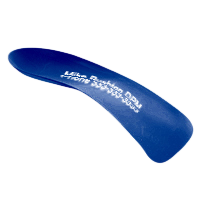
Atlas Biomechanics' thermoplastic heat moldable custom orthotic blanks allow you to produce a lab quality orthotic in office in about 10 minutes for a fraction of the price. Atlas Biomechanics offers dress and athletic orthotic blanks and prefab orthotic.


Orthotics
1) Narrow Profile (dress) Heat Mold, Direct Contact Orthotic
2) Medium Profile (athletic) Heat Mold, Direct Contact Orthotic


Please view our Orthotic Fabrication Guide to learn how easy it is to make a custom orthotic.

Our orthotics ( arch supports ) will control subtalar joint pronation that causes valgus heel, collapsed arch, and plantar fasciitis.

Heat Moldable, Direct Contact, Custom Orthotics:
* fraction the cost of orthotic labs.
* 3/4 semi-rigid shell, long lasting, total contact fit custom orthotic.
* 1.3 mm thin proprietary material for ease of molding.
* two orthotic models, Athletic (medium profile) and Dress (narrow profile).


Teri Green
Atlas Biomechanics

Thursday, March 21, 2013

Finanical Analysis of Heat Mold Orthotic Survey

Every year Atlas Biomechanics surveys the practitioners who use our Heat Mold, direct contact orthotics. We sent out over 500 surveys and received 214 back. Here are the results of orthotic economics.

1. Practitioners who bill cash for the heat mold, direct contact orthotic is 57%
2. Cash price billed for the orthotic device; mean of $196, range $73-425, mode $185.
3. Practitioners who bill insurance companies for the heat moldable orthotics is 43%.
4. Code used to bill to the insurance company is L3030, 96% using this  orthtotic code.
5. Insurance reimbursement for L3030 direct contact orthotic: mean $154, range $78-327.
6. Patients who receive heat mold orthotics after practitioner discusses it with the patient is 31%.
7. Fabricating in partial weight bearing and subtalar neutral is 78%.
8. Medical assistants who fabricate the orthotic device is 32%.
9. Practitioners who have Atlas Biomechanics private label is 59%.

Thanks to all of the practitioners who took time out of their busy schedule to fill out our annual survey.

Teri Green
Atlas Biomechanics 

Tuesday, January 15, 2013

Why use heat moldable, direct contact orthotics?

Heat moldable direct contact orthotics from Atlas Biomechanics allows the practitioner to fabricate a custom orthotic (DME code L3030) in their office, with out messy casts, inaccurate foam boxes and expensive orthotic labs.
Features of Atlas Biomechanics' heat mold, direct contact orthotics over traditional orthotics:
* 3/4 semi rigid shell.
* 12 mm heel cup for added control.
* narrow or medium profile.
* fits in most shoe gear, including heels, flats, loafers, work boots, ice skates, and ski boots.
* 1.3mm thin.
* completely heat moldable and reheat formable.
* heat gun or toaster oven is the only equipment needed.
* proprietary material to ease molding process.
* complete custom orthotic in 10 minutes.
* total contact fit.
* patients happy before they leave the office.
So you can see the advantages of heat moldable direct contact orthotics.
Teri Green
Atlas Biomechanics
www.atlasbiomechanics.com
Thank you all for making Atlas Biomechanics, www.atlasbiomechanics.com the world leader in heat moldable, direct contact orthotic manufacturer.
Teri Green
Atlas biomechanics
www.atlasbiomechanics.com

Tuesday, October 23, 2012

Shoe Orthotics For the Treatment of Low Back Pain

A recent study of 50 patients with chronic low back pain were divided into two groups, one with Atlas Biomechanics www.atlasbiomechanics.com heat moldable orthotic blanks and the other without heat mold orthotic blanks. After 6 weeks the group with orthotics fabricated from the Atlas Biomechanics heat mold orthotics were much improved compared to the control group.

Atlas Biomechanics www.atlasbiomechanics.com manufactures a heat mold orthotic blank. Duplicate a lab built custom orthotic in less than 10 minutes for a fraction of orthotic lab costs. These heat moldable orthotics  can be private labeled with the practitioners name and phone number.

Atlas Biomechanics heat mold orthotics are 3/4 semi rigid orthotic shell, 1.3 mm thin, completely heat moldable and reheat formable. Heat gun or toaster oven is the only equipment needed. Proprietary material used to ease of mold. Total contact fit. Meets HCPCS DME code L3030.

Teri Green,
Atlas Biomechanicswww.atlasbiomechanics.com

Tuesday, October 9, 2012

Heat Moldable Orthotics for the Treatment of Chronic Low Back Pain

A recent of study of 50 patients with chronic low back pain was performed. Half were given heat moldable orthotics, L3030, the type from Atlas Biomechanics and the control without orthotics. The group with the heat mold orthotics from Atlas Biomechanics had a significant reduction of low back pain. J Man PT 2011May;34(4):254-60.WWW.ATLASBIOMECHANICS.COM

Teri Green
atlas biomechanics

Monday, September 3, 2012

Heat Moldable Arch Support Orthotic

A heat molded thermoplastic orthotic shell from Atlas Biomechanics allows the practitioner to mold an orthotic directly to the patient's foot without having to cast or send out to a lab. Atlas Biomechanics eliminates the middleman, you produce a more accurate orthotic device and receive greater profit. Our heat moldable orthotic blank is billable under code L3030. The orthotic blank is completely moldable from a heat gun in about 2 minutes. Direct molding to the patient's foot can be accomplished either partial or full weight bearing. You control the fabrication process, not the lab. The thin profile (1.3mm) will fit in most shoes, including flats, heels, gym shoes, ski boots and hockey skates. Its 4-degree rear foot post allows for greater control and stability. www.atlasbiomechanics.com


Two Styles
Dress Arch Support for flats, dress shoes and loafers
Athletic Arch Support for sneakers, gym shoes

Sizing the Orthotic Blank to the Foot

Rather than go by the shoe size, it is better to hold the orthotic blank directly to the foot.
Fit the orthotic just proximal to the metatarsal heads and just a little (1-2mm) behind of the heel.
After deciding which blank to use, hold it directly to the foot.
Do not fit the blank while the patient is standing on the blank.
Dorsiflex the hallux (big toe) to see if the metatarsal head clears the end of the orthotic.


Heating the Orthotic Blank

There are 3 Ways to Heat the Blank
1) Purchase a heat gun (not a hairdryer) and heat resistant gloves at any hardware store.
Place the blank on a surface that will not burn from heat.
Hold the heat gun 1cm (1/2 inch) away from the blank.
Slowly move the heat gun up and down the blank.
Do not stop moving the heat gun ( you will melt the orthotic).
The average time is about 1.5-2 minutes.
Wearing heat resistant gloves you may push the arch to check for softness.
If it is still stiff, reheat for 10-15 seconds.

2) Boil water and turn off heat.
Wait 1 minute and then place the orthotic blank in the hot water.
Let the orthotic blank sit in the water for 1 minute.
Using a heat-resistant gloves place the orthotic under the shoe's insole.
Step into the shoe and press down for 2 minutes to mold the orthotic to your foot

3) Atlas Biomechanics also recommends using a toaster oven at 200 degrees.


Molding the Orthotic Blank to the Foot

You can mold the blank either as Subtalar Neutral or Calcaneal Resting Position, or a combo of each.
You can mold the blank while sitting, standing in a shoe (ski boot, ice skate, golf shoe or ballet flats) or on
a pillow.
Do not mold directly to the foot. Use a heat protector such as a towel, double socks or the shoe's insole.
Make sure the rear of the orthotic is not too far forward on the foot.
Make sure the medial side of the orthotic covers the arch entirely.
Either hold the foot in Subtalar Joint Neutral or Calcaneal Resting Position and have the patient press firmly down.
If molding directly in a gym shoe, use the insole as the heat protector. Place the orthotic under the insole and have the patient press down.
After the patient has molded the orthotic, place it in their shoes. It is most comfortable under the insole.


Teri Green
Atlas Biomechanics