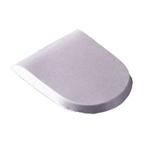
Showing posts with label adjustable heel lifts. Show all posts

Thursday, July 5, 2018

Adjustable Heel Lift with built in Heel Wedge

The only adjustable heel lift with a built-in varus or valgus heel wedge. Why have a heel wedge when treating unequal leg length? The short leg will have an inverted (valgus ) calcaneus. Our adjustable heel lift brings the ground up to the foot for a better fit and feel.


 Adjustable Heel Lift with Varus or Valgus heel wedge 
-Three removable 3 mm (1/8 inch) rubber cork layers.
-Each layer is peelable to achieve the proper correction of limb length discrepancy.
-1/2 of the bottom layer can be peeled for varus or valgus correction.
-Helps prevent pronation of the Subtalar Joint of the short limb.
-Most short limbs will have an inverted calcaneus, our heel lift brings the ground to the foot.
-More stabilizing foundation to the short limb.
-Easily fabricate either a Varus Heel Wedge or Valgus Heel Wedge

Sizes: Small: women 4-7 Medium: women 8-10, men 7-9 Large: women 9-11, men 10-14

Teri Green
Atlas Biomechanics

Wednesday, May 30, 2018

1/4" (6 mm) Heel Lifts To Treat Unequal Leg Length

Heel lifts are a simple and inexpensive medical device that is used to treat Unequal Limb Length, Achilles Tendinitis, and Short Limb.

Atlas Biomechanics manufactures heel lifts in the United State in Rubber Cork or EVA/Rubber blend. They are lightweight, durable and comfortable.

For the best alignment, place the heel lift under the shoe's insole. This will allow the heel lift to sit firmly at the bottom of the shoe. When the shoe lift is under the insole there is optimum control and comfort.

Atlas Biomechanics heel lifts are firm and true to size. There is a softening of the shoe lift with use.

Customer Practice Studies for 6 mm 1/4" Heel Lifts (surveying our practitioners)

-Achilles Tendonitis: 65% use the 6 mm (1/4 inch) heel lift to treat.
-Limb Length Discrepancy: 45% also use the 6 mm (1/4 inch) heel lift to treat.

Professional Grade 1/4 inch ( 6 mm ) Heel Lifts
*10 lifts bulk pack
*6mm (1/4 inch) shoe heel lift
*Comfortable natural base
*Long lasting risers

* 1/4" heel lifts with double sided tape to hold into shoe

*Treat unequal limb length, achilles tendonitis
*Made in the USA

For best alignment, place the heel lift under the shoe's insole. This will allow the heel lift to sit firmly at the bottom of the shoe for optimum control and comfort.

Atlas Biomechanics manufactures a full line of heel lifts. Whether they be our adjustable heel lifts, cork heel lifts or eva/rubber blend they are medical grade.


Teri Green
Atlas Biomechanics

Friday, July 28, 2017

Avantages of an Adjustable Heel Lift

Adjustable heel lifts have numerous advantages over conventional heel shoe elevator lifts.

1. Leg Length Discrepancies: allows exact adjustment for proper heel elevation.
2. Achilles Tendon Therapy: allows for a gradual height reduction to decrease the strain of a tight Achilles while in treatment.
3. Day-to-day adjustments.
4. Adjustable height correction from 9 mm (3/8") to 6 mm (1/4") to 3 mm (1/8").
5. A constant descending slope.
6. Easily trimmable with a scissor.
7. Medical grade rubber cork material.
8. Made in the USA.

Adjustable Heel Lifts Treat:

-Limb Length Inequality
-Achilles Tendonitis
-Heel Spurs
-Ill-fitting Ski Boots, Ice Skates

Sizes:


Small: (Women's shoe sizes 4-7)

Medium: (Women's shoe sizes 8-10) (Men's shoe size 7-10)

Large: (Women's shoe sizes 9-11) (Men's shoe size 11-14)

Thanks

Teri Green
Atlas Biomechanics

Saturday, July 16, 2016

Cork Adjustable Heel Lift with built in Varus/Valgus Heel Wedge

A totally new type of Heel Lift. Atlas Biomechanics developed and manufactures the only cork adjustable heel lift with a varus or valgus heel wedge built into the device. We are the only ones producing such a lift. Atlas Biomechanics produces these in the USA. They are a total of 9 mm, 3/8 inches heel lift. Each 3 mm (1/8 inch) layers are peelable.

Adjustable Heel Lift with varus or valgus heel wedge
*Three removable 3 mm (1/8 inch) rubber cork layers.
*Each layer is peelable to achieve the proper correction of limb length discrepancy.
*1/2 of the bottom layer can be peeled for varus or valgus correction.
Helps prevent pronation of the Subtalar Joint of the short limb.
Most short limbs will have an inverted calcaneus, our heel lift brings the ground to the foot.
More stabilizing foundation to the short limb.
Easily fabricate either a Varus Heel Wedge or Valgus Heel Wedge
Sizes: Small: women 4-7 Medium: women 8-10, men 7-9 Large: women 9-11, men 10-14

cork adjustable heel lift

Teri Green

Atlas Biomechanics

Thursday, June 13, 2013

How to Treat Achilles Tendinitis with Heel Lifts

Achilles tendinitis is a common foot injury for both athletes and women who wear high heels. The calf muscle (Gastroc-Soleus) blends into a thick tendon attaching to the back of the heel (calcaneus). The Achilles tendon is important for walking (gait ambulation), allowing for us to push off, (raising the heel).

Achilles tendonitis most common cause is due to overuse with a tight tendon. The athlete over does a physical activity and Achilles Tendon is over stretched. There can be because of a sudden increase of distance, intensity or amount of an activity. This can be aggravated by a tight Achilles tendon or gastroc soleus tendon, over pronation, ill fitting shoes or old worn out athletic shoes.

Another common reason for Achilles tendonitis is with constant high heel shoe use. Over time when wearing high heels, the Achilles Tendon or Gastroc Soleus muscle will shorten since the foot is in a plantar flexed position. When the same person then wears a flatter shoe or goes barefoot, the Achilles is more stressed since it is already in a shorten position.

One of the most common symptoms of Achilles Tendinitis is pain at its attachment in to the heel bone (calcaneus). This especially occurs when there is a period of inactivity such as sleeping or sitting, due to the Achilles shortening from non-use.

There are several ways to treat Achilles Tendonitis. These include rest, anti inflammatory, stretching, ice, orthotics, PT and one that should be on every one's list, heel lifts. A heel lift is a medical device placed in the shoe to raise up the heel bone (calcaneus). Heel lifts come in several different types, such as cork and  rubber and different heights (3 mm, 6 mm and 9 mm shoe lifts). When a in shoe heel lift is used, it will slightly shorten the Achilles to off load the tendon during gait. If  the Achilles is slightly shortened by a heel lift the effective length for propulsion is increased thus allowing for the tendon to heal faster.

Many athletes have tried using a heel lift with Achilles Tendonitis with great success. The most common height used is a 6 mm heel lift in both shoes. Heel lifts should be used in all shoes while treating Achilles tendinitis.

About Atlas Biomechanics;
Atlas Biomechanics is a woman owned sports medical manufacturer of heel lifts in the US. We produce 3 mm, 6 mm and 9 mm heel lifts, plus an adjustable heel lift with a built in heel wedge. Atlas Biomechanics manufacturers cork heel lifts eva rubber heel lifts and adjustable heel lifts. 

Teri Green  
Atlas Biomechanics

Wednesday, May 1, 2013

Orthotic Blanks: Varus and Valgus Heel Wedge

Orthotic Blanks: Varus and Valgus Heel Wedge: A varus or valgus heel wedge s that can be easily fabricated from our adjustable heel lift, the Triple V Heel Lift are meant to decrease ei...

Varus and Valgus Heel Wedge

A varus or valgus heel wedges that can be easily fabricated from our adjustable heel lift, the Triple V Heel Lift are meant to decrease either supination or pronation of the subtalar joint. Improving the stabilization of the subtalar joint with a varus heel wedge or a valgus heel wedge can improve foot, ankle, knee, hip and lower back function. A heel wedge can improve an abnormal heel strike and drecrease painful joint, muscle and tendon motion further up the kinetic chain.

Some examples were a practitioner would us our Triple V Heel Lift with its either valgus or varus heel wedge. A typical patient with limb length discrepancy will have their short leg in subtalar supination to compensate and basicly to get their foot on the ground. As the patient goes through the gait cycle, they will have excessive pronation at the subtalar joint.  If one would place our height adjustable shoe lift into a varus wedge, then the heel (calcaneus) is stabilized at heel strike.

Indications for a varus heel wedge:
1. excessive subtalar joint pronation (flatfoot, collapsing arch)
2. medial ankle sprains
3. shin splints
4. plantar fasciitis
5. posterior tibial tendon dysfunction
6. calcaneal eversion
7. medial knee syndromes

Indications for a valgus heel wedge:
1. excessive subtalar joint supination
2. lateral ankle sprains
3. lateral knee syndromes
4. peroneal tendonitis
5. calcaneal inversion

View our Triple V Heel Lift, the only height adjustable heel lift with a varus or valgus heel wedge.

by Teri Green

Sunday, January 13, 2013

Triple V Heel Lift, Varus/Valgus and Variable Height Heel Lift

Triple V Heel Lift, a Varus, Valgus and Variable Height adjustable heel lift is a totally new concept in heel lifts. This patent pending heel lift from Atlas Biomechanics allows for height correction due to its 3 removable 1/8" (3 mm) rubber layers. The bottom layer can be peeled for either a varus or valgus correction. This prevents subtalar joint pronation. Most short limbs are in calcaneal inversion and the Triple V Heel Lift corrects for that. Thus the short limb has increased stabilization. Our research at Atlas Biomechanics shows that when patients wear the Triple V Heel Lift, they have decreased pain and fatigue in the low back, knees, and ankles.
The Triple V Heel Lift
* Varus, valgus and variable height adjustable heel lift.
* Totally new concept in heel lifts in 30 years.
* Suede top cover.
* Bottom layer can be peeled for either a varus or valgus correction.
*Prevents subtalar pronation.
* Height adjustable.
* Corrects for calcaneal inversion.
* Decreases pain and fatigue in low back, knees and ankles.
* Increased stabilization of the short limb. 
great response for our newest heel lift, the triple v heel lift from atlas biomechanics, www.atlasbiomechanics.com

Friday, November 2, 2012

Limb Length Discrepancy and Heel Lifts

Heel lifts are an inexpensive treatment option for limb length discrepancy and Achilles tendonitis. A short leg can cause many different painful conditions.

The presence of a limb length discrepancy or short leg is usually associated with pelvic joint or lumbar spine misalignment and cascading lower back pain. Limb length discrepancy or short leg is usually functional, but may also be anatomical ( knee or hip replacement surgery).

There are a number of musculoskeletal conditions that may aggravate the functional limb length inequality, it is usually due to;

1) a misalignment of one of the sacroiliac joints causing the sacral base to drop to one side,  or

2) a rotation either flexion or extension of one of the hip bones out of normal position.

These types of joint misalignment cause a functional uneven limb length. Limb length discrepancy is a common symptom in patients with iliac dysfunction and lower back pain.

Short leg syndrome is usually accompanied by other compensatory changes due to the dropping of the sacral base. These include;

1) thoracolumbar scoliosis,  and

2) lumbar vertebral rotation.

Heel Lifts and manual therapy may be all that is needed to achieve leg length equality and resolve the symptoms.

There are different limb length correction lifts.

Atlas Biomechanics produces both cork, eva/rubber blend and adjustable heel lifts:

Heel Lifts produced by Atlas Biomechanics include:

3mm (1/8")
6mm (1/4")
9mm (3/8")
12mm (1/2")
Adjustable Cork Heel Lift
Adjustable Eva/Rubber Heel Lift

Teri Green
Atlas Biomechanics
www.atlasbiomechanics.com manufacturers USA heel lifts in bulk discount packs.