Showing posts with label limb length discrepancy. Show all posts

Tuesday, August 12, 2025

How Heel Lifts Treat Limb Length Discrepancy After Hip Replacement Surgery

 Hip replacement surgery is a life-changing procedure that can restore mobility and relieve chronic pain. However, a common post-operative challenge for some patients is a limb length discrepancy (LLD), where one leg ends up being slightly shorter than the other. This can occur due to a number of factors, including the type of implant used, the surgical technique, or pre-existing conditions. While a small discrepancy may go unnoticed, a more significant difference can lead to a cascade of biomechanical issues, including back pain, hip pain, and an altered gait.


A simple and effective solution exists to address this issue: Atlas Biomechanics' heel lift.


The Effects of Unequal Leg Length

When one leg is shorter, the body compensates in various ways to maintain balance. The pelvis tilts, the spine curves to one side (a functional scoliosis), and the shoulders may become uneven. This forced asymmetry places unnatural stress on the joints and muscles, particularly in the lower back, hips, and knees. This can lead to:


Chronic Pain: The uneven loading can cause chronic pain in the hips and lower back as the body struggles to adapt.

Gait:  A patient with limb length descrepancy may develop a limp or an inefficient walking pattern, which can increase the risk of falls and further joint stress.

Postural: Over time, the body’s compensatory mechanisms can lead to poor posture and muscular imbalances, affecting the entire kinetic chain.

How a Heel Lift Restores Harmony

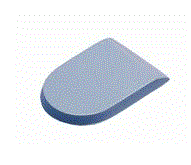
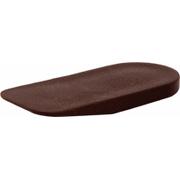
A heel lift is a wedge-shaped insert placed inside the shoe of the shorter leg. By raising the heel, this seemingly minor adjustment has a profound impact on the body’s alignment and function.


1. Equalizing Leg Length: The primary function of the heel lift is to physically equalize the length of the two legs. By adding height to the shorter side, it brings the pelvis back into a level position. This foundational correction is the key to addressing all the subsequent issues.


2. Correcting Posture and Spinal Alignment: With the pelvis level, the spine can straighten, and the compensatory curves are no longer needed. This reduces the strain on the back muscles and vertebrae, often providing immediate relief from back pain and improving overall posture.


3. Restoring Natural Gait: When the legs are of equal functional length, the patient’s walking pattern becomes more symmetrical and fluid. The limp disappears, and the stride becomes more balanced, reducing the risk of falls and making daily activities more comfortable.


The Importance of Proper Diagnosis and Prescription

While heel lifts are an effective solution, their use requires a precise approach. A doctor or physical therapist will use specialized measurements, such as a standing X-ray or a scanogram, to accurately determine the exact leg length discrepancy.


Accurate Measurement: The height of the heel lift must be carefully calibrated to match the measured discrepancy. Using a lift that is too high or too low can be just as problematic as having no lift at all, as it could introduce new imbalances.

Gradual Introduction: In some cases, a professional may recommend starting with a slightly smaller lift and gradually increasing the height as the body adapts. This helps the muscles and joints adjust slowly and comfortably to the new alignment.

Part of a Comprehensive Rehabilitation Plan

It’s important to understand that a heel lift is a powerful tool within a broader rehabilitation strategy. While it addresses the physical discrepancy, a patient may also benefit from a physical therapy program to:


Strengthen Core Muscles: To support the new, corrected posture.

Improve Flexibility: To release tight muscles that may have developed during the period of LLD.

Retrain Gait: To help the patient relearn a normal, balanced walking pattern.

In conclusion, for patients facing limb length discrepancy after hip surgery, a heel lift is not just a shoe insert—it’s a critical component of their recovery. By restoring physical symmetry, it alleviates pain, corrects posture, and allows patients to regain the balanced, pain-free mobility that hip surgery was intended to provide.


Atlas Biomechanics manufactures heel lifts in several heights and materials. We produce cork heel lifts, rubber heel lifts, adjustable heel lifts and heel wedges here in the USA.

Thursday, May 14, 2020

Atlas Biomechanics : Effects of Limb Length Discrepancy on Spinal Motio...

Atlas Biomechanics : Effects of Limb Length Discrepancy on Spinal Motio...: There was a study in Japan to evaluate the effect of limb length discrepancy on the changes in curvature of the normal spine during gait. Th...

Effects of Limb Length Discrepancy on Spinal Motion During Gait

There was a study in Japan to evaluate the effect of limb length discrepancy on the changes in curvature of the normal spine during gait. The researchers raised the heel of healthy volunteers to simulate limb length inequality. Their results showed an asymmetrical lateral bending motion during heel raising gait as compensation for the leg length discrepancy. Lateral bending of the thoracic spine was 4.2 degrees in heel raising gait and only 3 degrees in normal gait. Lateral bending angle of the lumbar spine was 8.1 in heel raising gait and only 6.1 degrees in normal gait. Their conclusion is that patients who have leg length discrepancy are at greater risk of developing disabling spinal disorders due to exaggerated degenerative change. They state that heel lifts may be helpful in treating leg length discrepancy. Spine2003Nov1;28(21):2472-6.

Atlas Biomechanics manufactures heel lifts from medical grade rubber cork and eva/rubber blends. We also product adjustable heel lifts and shoe lifts in 1/8", 1/4", 3/8" and 1/2" heights.

Teri Green
Atlas Biomechanics

Thursday, July 5, 2018

Adjustable Heel Lift with built in Heel Wedge

The only adjustable heel lift with a built-in varus or valgus heel wedge. Why have a heel wedge when treating unequal leg length? The short leg will have an inverted (valgus ) calcaneus. Our adjustable heel lift brings the ground up to the foot for a better fit and feel.


 Adjustable Heel Lift with Varus or Valgus heel wedge 
-Three removable 3 mm (1/8 inch) rubber cork layers.
-Each layer is peelable to achieve the proper correction of limb length discrepancy.
-1/2 of the bottom layer can be peeled for varus or valgus correction.
-Helps prevent pronation of the Subtalar Joint of the short limb.
-Most short limbs will have an inverted calcaneus, our heel lift brings the ground to the foot.
-More stabilizing foundation to the short limb.
-Easily fabricate either a Varus Heel Wedge or Valgus Heel Wedge

Sizes: Small: women 4-7 Medium: women 8-10, men 7-9 Large: women 9-11, men 10-14

Teri Green
Atlas Biomechanics

Thursday, June 7, 2018

SHORT LEG SYNDROME (UNEQUAL LIMB LENGTH) Biomechanics of the Short Limb

The presence of leg length discrepancy is usually associated with pelvic or lumbar misalignment. The short limb may be FUNCTIONAL, ANATOMICAL, or a COMBO of both. Studies have found that the majority of patients presenting to our offices are functional, but a growing number seen are anatomical, the result of post hip or knee replacement surgeries. Many of these can be corrected within shoe heel lifts. You need an understanding of unequal limb length biomechanics before prescribing a heel lift from Atlas Biomechanics.


FUNCTIONAL SHORT Limb:
1. The sacroiliac joint that is misaligned causing the sacral base to drop to one side.
2. Flexion or Extension with one of the iliac bones out of its normal anatomical position.
3. Posterior Tibial Tendon Dysfunction causing the subtalar joint to overpronate, effectively shorting the limb.

ANATOMICAL SHORT Limb:
1. Hip or knee replacement surgery.
2. Polio.
3. Congenital, birth injuries and infections to the growth plates.
4. Fractures.

BIOMECHANICS OF THE SHORT Leg:
1. Supination of the subtalar joint.
2. External rotation of the tibia.
3. External rotation of the knee.
4. Abnormal patella tracking.
5. Pelvic Tilt.
6. Shifting of the center of gravity to the short side.

BIOMECHANICS OF THE LONG LIMB:
1. Pronation of the subtalar joint.
2. Internal rotation of the tibia and the knee.
3. Abnormal patella tracking.
4. Vaulting over the hip joint.

GAIT EVALUATION OF THE UNEQUAL LIMB LENGTH:
1. Center of gravity shifted to the short side.
2. Unilateral early heel lift.
3. Pelvic Tilt.
4. Shoulder drop.
5. Unilateral subtalar pronation.
6. Unilateral shoe wear (lateral heel).
7. Abnormal knee rotation and patella tracking.

Atlas Biomechanics produces all of our heel lifts in the USA.

Shoe Heel Lifts come in small, medium and large. They are manufactured from either EVA/Rubber or Cork/Rubber blend.

Heights are:
1/8 inch (3 mm) heel lift 
1/4 inch (6 mm) heel lift   
3/8 inch (9 mm) heel lift 
1/2 inch (12 mm) heel lift 
and
Adjustable Heel Lift with Built-in Heel Wedge  

Teri Green
Atlas Biomechanics

Wednesday, June 5, 2013

Shoe Heel Lifts Can Reduce Low Back Pain with Limb Length Inequality

Heel lifts when placed in shoes can decrease chronic low pain in patients with limb length inequality, according to a study at the Durham VA Medical Center.

In their study they wanted to determine what changes occur in pain and disability when a shoe heel lift is given to patients with chronic low back pain who also have limb length discrepancy. When the short leg gait compensates, there is a bowing in the lower back causing pain. They rated pain and disability in the patients before they received a heel lift and after. Subjects determined their lift height based on resolution of low back pain symptoms.

Following heel lift intervention, 9 of 12 subjects had reduction in low back pain and 9 of 12 patients also had decreased disability. The conclusion of the study is that shoe heel lifts may reduce low back pain and improve function for patients who have chronic low back pain and a limb length inequality.

When a patient comes to our office with low back pain, a practitioner should evaluate for limb length discrepancy. And when a patient who had a limb shorting surgery such as a knee or hip replacement surgery, the practitioner should evaluate for a low back pain.

Teri Green
Atlas Biomechanics

About Atlas Biomechanics. We are a woman owned sports medical manufacturer of heel lifts, heat mold orthotics and foot pads. We produce 3 mm heel lift, 6 mm heel lift, and 9 mm heel lift

Wednesday, April 24, 2013

Chronic low back pain, limb length discrepancy and Shoe Heel Lifts

In shoe heel lifts have been shown to decrease pain and disability in patients with limb length discrepancy who also have chronic low back pain. In a study from Durham VA Medical Center, they wanted to study the effect of heel lifts (shoe lifts) on chronic low back pain patients with limb length inequality. Previous studies have shown that a short leg may be the cause of chronic low back pain.
In their study, 12 patients with limb length discrepancy and chronic low back pain were given an in shoe heel lift. The results revealed reductions of general pain for 9 of 12 patients who wore the shoe lifts. Patients also had less disability 9 of 12.

In conclusion, shoe heel lifts may reduce low back pain and improve function for patients who have chronic low back pain and limb length discrepancy. So measure and evaluate limb length in all your chronic low back patients. A simple heel lift can make a huge difference.

Atlas Biomechanics is a leader on the production of US heel lifts. Our in shoe lifts come in 3 mm, 6 mm, and 9 mm heel lift heights.
by
Teri Green
Atlas Biomechanics

Saturday, February 9, 2013

Leg Length Inequality, Low Back Pain and Heel Lifts

A classic but well referenced article by Dr. O. Friberg in Spine (Phila PA 1976) Sep;8(6):643-51. It has been refenced by other articles over 211 times.

Dr. Friberg studied 798 patients with uni lateral hip and or chronic and therapy resistant low back symptoms vs 359 patients that were pain free. He observed that 79% (highly significant percentage) of patients with pain also had a limb length discrepancy. Dr. Friberg also found that 89% of the patients with had the chronic/recurrent sciatic pain and/or uni lateral hip pain on the longer leg side of the body. When he corrected the leg length inequality with a simple shoe heel lift, a permanent  and mostly complete alleviation of the patients' symptoms was achieved in the majority of the cases.

This is an old but still very relevant article even for today's practitioners. How many patients come in with uni lateral hip and or lower back pain who are not examined for limb length discrepancy? Are these patients given a simple inexpensive shoe heel lift? How about the tens of thousands of patients who every year receive a total hip or total knee replacement surgeries with leg length inequality?

Measuring for limb length inequality on our patients with unilateral hip and low back pain should be performed routinely. Dispensing an inexpensive and simple shoe heel lift can alleviate many of our patients' long term and resistant symptoms.

Teri Green, info@atlasbiomechanics.com

About Atlas Biomechanics; Atlas Biomechanics is a woman owned sports medical manufacturer and distributor. It is one of the leading heel lift manufacturers in the world. It produces a full line of traditional heel lifts, plus the newest patent pending shoe heel lift, The Triple V Heel Lift, the only varus/valgus and variable height heel lift in production.

Saturday, November 24, 2012

Adjustable Cork Heel Lift, With Built In Varus or Valgus Heel Wedge

Atlas Biomechanics spent 2 years developing a new type of heel lift, the Triple V Heel Lift. The Triple V Adjustable Cork Heel Lift has varus and valgus tilt control with variable height adjustment.
The Triple V Heel Lift has 3 peelable 3 mm thick rubber cork layers to achieve proper height for limb length discrepancy. The bottom layer has a removable cork to achieve varus or valgus correction.

Most patients with limb length discrepancy, the short limb subtalar joint is in varus or inverted position for compensation. The Triple V Adjustable Cork Heel Lift corrects the inverted subtalar joint for patient compliance.

Atlas Biomechanics is a woman owned small business specializing in sports medical supplies sold in wholesale/bulk discount packs.

Teri Green
Atlas Biomechanics 

Monday, November 12, 2012

Orthotic Blanks: Heel Lifts to Treat Chronic Lower Back Pain

Orthotic Blanks: Heel Lifts to Treat Chronic Lower Back Pain: Heel lifts were studied by the Sackler School of Medicine in Israel to see if adding a heel lift to patients with both chronic low back pain...

Heel Lifts to Treat Chronic Lower Back Pain

Heel lifts are an inexpensive simple medical device designed to treat limb length discrepancy. Patients with limb length discrepancy often have chronic lower back pain.

 Heel lifts were studied by the Sackler School of Medicine in Israel to see if adding a heel lift to patients with both chronic low back pain and limb length discrepancy will relieve pain.

They divided patients with Limb Length Discrepancy and Chronic Low Back Pain into two groups. One group was dispensed a heel lift and the other did not receive a heel lift. Both groups received manual therapy.

The results revealed that the group of patients who received the heel lift did significantly better than the group who did not get the heel lift. They stated that adding the heel lift significantly reduced both pain intensity and disability. They also stated that adding a heel lift appears to reduce chronic low back pain and functional disability in patients with limb length discrepancy. The medical school recommended the simple, noninvasive and inexpensive heel lift for treatment of chronic lower back pain.


Teri Green
Atlas Biomechanics,