Friday, September 1, 2017

Steel Insole Plate for Treatment of a Morton’s Toe

A steel plate insole can be beneficial in treating a Morton’s Toe. When the second toe is longer than the big toe, it is called Morton’s Toe.  This is due to genetics, you are born with it. Most people will not have any issues when their second toe is longer.

When the second toe is longer than the big toe, that means that the second metatarsal is longer than the first metatarsal. This will cause under stress on the metatarsal toe joint and the forefoot. Some of the most common problems this can cause are Metatarsalgia, (ball-of-foot pain), Morton’s Neuroma, Metatarsal Stress Fractures, Plantar Fasciitis, Calluses, Bunion, Hammer, Claw and Mallet toes.


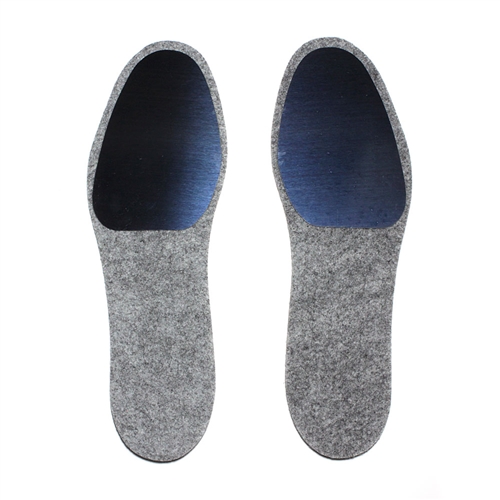
A steel insole is a stiff orthotic plate that will not allow motion in the forefoot. They are produced from thin steel with a felt top-cover. Some also call them steel shank. One places the steel insole plate in place of the shoe’s insole. Now with a spring steel insole plate, the Morton’s Toe and forefoot is in a neutral position not allowing an abnormal range of motion.

Teri Green

Atlas Biomechanics

Friday, July 28, 2017

Avantages of an Adjustable Heel Lift

Adjustable heel lifts have numerous advantages over conventional heel shoe elevator lifts.

1. Leg Length Discrepancies: allows exact adjustment for proper heel elevation.
2. Achilles Tendon Therapy: allows for a gradual height reduction to decrease the strain of a tight Achilles while in treatment.
3. Day-to-day adjustments.
4. Adjustable height correction from 9 mm (3/8") to 6 mm (1/4") to 3 mm (1/8").
5. A constant descending slope.
6. Easily trimmable with a scissor.
7. Medical grade rubber cork material.
8. Made in the USA.

Adjustable Heel Lifts Treat:

-Limb Length Inequality
-Achilles Tendonitis
-Heel Spurs
-Ill-fitting Ski Boots, Ice Skates

Sizes:


Small: (Women's shoe sizes 4-7)

Medium: (Women's shoe sizes 8-10) (Men's shoe size 7-10)

Large: (Women's shoe sizes 9-11) (Men's shoe size 11-14)

Thanks

Teri Green
Atlas Biomechanics

Monday, June 26, 2017

How to Use a Re-usable, Stick On Foot Gel Pad

Self Adhesive, Reusable Gel Stick On Foot Pads

Soft gel cushions are superior in reducing pressure while providing comfort to the foot. They are a non-latex gel. Self-sticking gel pads are self-sticking cushions, which can be washed and reused over and over again.
Excellent stick on foot pads cushions for long-lasting comfort.

-Self Sticking
-Re-Usable for Months
-Medical Grade Gel
-Made in the USA
-Stick On Foot Pads

Directions:
-Apply gel foot pad to clean, oil/cream free and dry foot.
-Place gel foot cushion directly to the skin.
-Remove gel foot protector at night to allow the skin to breathe.
-Remove by gently peeling away from the skin.
-Hand wash with warm soapy water and air dry to allow the pad to get sticky again.

Atlas Biomechanics produces our gel stick on foot pads for

-Arch
-Metatarsal (Ball of Foot)
-U-shaped Callus Pad
-Oval Callus Pad
-Dancer's / Sesamoid Pad

Teri Green
Atlas Biomechanics 


Tuesday, June 13, 2017

Heel Lifts in Ice Skates

Some ice skaters have the sensation that their heels are lifting out of their skates and the general feeling that it does not fit properly. A heel that is pistoning in the skate can cause undo pressure on the forefoot. This will also improper energy transfer on the ice skate.

One of the simplest correction of a heel lifting in the ice skate is to add a cork heel lift. The most common heel lift used is the Atlas Biomechanics 3mm (1/8") cork heel lift. The 6mm (1/4") cork heel lift could also be used for more severe cases.

Usually, the 3 mm ( 1/8 inch ) cork heel lift is placed under the ski boot's insole. They also can be stacked for a higher correction. This will cause the best alignment. This will allow the heel lift to sit firmly at the bottom of the ski boot for optimum control and comfort.

Teri Green

Saturday, May 20, 2017

Steel Shank Shoe Inserts for Forefoot Injuries

Steel full stabilizer plate rigid insoles, half-length, and full length are used to stiffen the shoe's insole. This will limit the range of motion of the forefoot and midfoot. Doing so will make the shoe non-flexible. These steel shank shoe inserts (either 1/2 or full length) will limit the dorsiflexion at the metatarsal joints. Immobilizing the forefoot and metatarsal joints prevent the joints from bending during walking and sports. They can also be used for puncture resistant insoles.

Atlas Biomechanics produces two types of steel shank shoe inserts.

1.  Steel 1/2 Stabilizer Plate Rigid Insoles, Half Length

2.  Steel Stabilizer Plates Insoles, Full Length

Stabilizer / Insole Plates to Limit Fore-Foot, Metatarsal Joints & Turf Toe

-Used to stiffen the sole of the shoe.
-Limits Range of Motion of the Forefoot and Midfoot.
-Makes shoe Non-Flexible.
-Extremely thin steel stabilizer plate insole, 1/8" thick.
-Comfortable and durable felt top cover.
-These steel insole plates are constructed to Limit Dorsiflexion at the metatarsal joints.
-Immobilizes toe joint to prevent it from bending during walking and sports.
-Puncture resistant insole

Indications of the Spring Steel Insoles- 1/2 Steel Stabilizer Plates
1- Problems requiring a Rigid or Semi-Rigid footbed
2- Turf Toe
3- Hallux Limitus / Hallux Rigidus
4- Forefoot Pain
5- Metatarsalgia
6- Cuboid Syndrome
7- Freiburg's Infraction
8- Bunionectomy
9- Foot Stability Post-op
10- Shin Splints
11-Plantar Plate Tear

Steel 1/2 stabilizer plate rigid insoles, half-length, and full length are used to stiffen the shoe's insole.

About Atlas Biomechanics: We are a woman owned sports medical manufacturer of Foot Pads, Heel Lifts and Heat Moldable Orthotics.

Teri Green
Atlas Biomechanics
Thursday, April 13, 2017

6mm ( 1/4" ) Heel Lift is the Most Prescribed Shoe Lift for Achilles Tendonitis in 2019

 Achilles tendonitis is frequently treated with in shoe heel lifts. Per our survey with Atlas Biomechanics prescribing practitioners, the 6 mm ( 1/4") heel lift is the most prescribed for their patients in 2019.

Achilles tendonitis is a painful inflammation of the tendon that attaches to the calcaneus ( heel bone). One of the most common and least expensive treatment options is to put a heel lift in the back of the shoe. Putting a heel lift in the shoe will raise the heel bone to decrease the stretch on the Achilles tendon. It will allow the Achilles tendon to relax and heal faster.

A 6 mm ( 1/4 inch ) heel lift will raise the heel just enough to relax the Achilles tendon to allow healing.


Atlas Biomechanics produces two types of 6 mm ( 1/4" ) heel lifts.

1. Cork Heel Lift

2. EVA/Rubber Heel Lift

These heel lifts are produced here in the USA. They come with double sided tape to allow better application.

For Best Alignment and Optimum Control:

1. Place under the shoe's insole.
2. Make sure they are against the back of the shoe.
3. Heel Lifts are firm but will soften with use.


Teri Green
Atlas Biomechanics

6mm ( 1/4" ) Heel Lift is the Most Prescribed Shoe Lift for Achilles Tendonitis

Achilles tendonitis is frequently treated with heel lifts. Per our in-house survey with Atlas Biomechanics prescribing in shoe heel lifts, the 6mm (1/4") heel lift is most dispensed.

For Achilles Tendonitis

10% 3mm ( 1/8" ) Heel Lift
65% 6mm ( 1/4" ) Heel Lift
20% 9mm ( 3/8" ) Heel Lift
5%  12mm ( 1/2" ) Heel Lift

Cork heel lifts are dispensed over our EVA/Rubber lifts 60% to 40%
Number of Respondents: 418

The Achilles Tendon is the largest tendon in the body. It starts as the calf muscle and ends in the posterior calcaneus. When it is inflamed, one of the most common and least expensive treatment is to place a heel lift in the shoe to shorten the Achilles Tendon.


Teri Green
Atlas Biomechanics

About Atlas Biomechanics: We are a woman owned sports medical manufacturer of Heel Lifts, Foot Pads and Heat Moldable Orthotics.